Post #7
“Biopolitics deals with the population, with the population as a political problem, as a problem that is at once scientific and political, as a biological problem and as power’s problem.” ~M. Foucault (1976:245)
Foucault states the biopower is when human biological features are the object of political strategy. He states that this way of thinking began with enlightenment thinkers—Hobbes believed that monarchs must rule, otherwise the world would devolve into a violent state of anarchy. This is called Juridical power—in which law has authority over citizens, with the threat of violence for those who do not comply. At the time of enlightenment, a new type of power emerged—one of governing, of producing food, of maximizing profits through trade; one in which education, healthcare, psychiatry, and the planning and executing epidemic control emerged. In each case, different types of power is used in different ways—using certain methods, certain groups of people.
This system utilized not only juridical power, but also biopower—the production of subjects. It aims not only to say “do or do not”, but also to know people’s minds and direct thought and desire itself. Juridical power subtracts from what a person can do, but biopower is productive—used through discipline and training. It is used as an action on an action—for example, in police conduct, in handling a weapon, in driving, flying, scheduling or testing. It is direction based on the possibility of a reward or the possibility of punitive measures.

Biopolitics reduces people to objects—what can they do best, what is their optimized position in society for greatest economic output, best position to optimize support for existing power systems, best position to optimize productivity? In many ways, it makes subjects manpower, the source of a country’s wealth. It also works to optimize situations which protect those already in power.
Many governments highlight and advocate the importance of public health not out of genuine concern for its citizens but as a means to control it for economic productivity and wealth. Wealth equals power and a more influential hand on the global stage. The COVID-19 pandemic has complicated this form of biopolitics, as economies stall around the world because people stay home from work and do not spend money.
Some regimes have utilized the COVID-19 pandemic to exercise a different kind of biopolitics under the guise of protecting public health. These governments have taken advantage of the crisis and panic in order to grant themselves higher powers in entering their subject’s private lives. For example, Russia has implemented extensive surveillance systems which glean information from location tracking apps, CCTV cameras with facial recognition, QR codes, mobile phone data, and credit card records. There is almost no doubt that this monitoring system will not be terminated once the pandemic is over, and will be used by the Russian government to learn about its citizens and how best to use and control them. In India, new apps collect biometric data without any legal oversight, some forcing those in quarantine to upload a selfie every thirty minutes to ensure compliance.
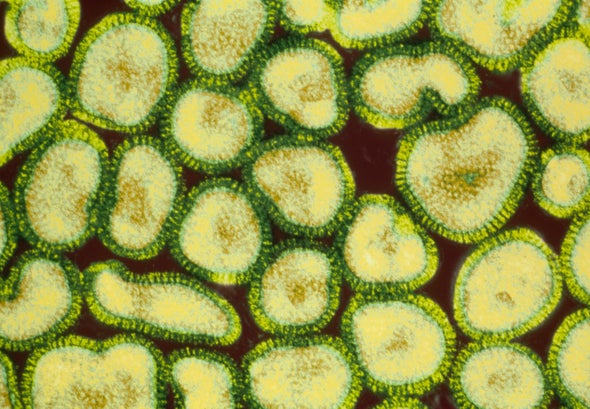
One may view humanity itself as a sort of virus; one that endlessly replicates itself on its host, Earth, and though it is sometimes harmless it is mostly triggering catastrophic events and killing its host through deforestation, carbon emissions, fracking, and pollution, among many other ways. Some say that the virus is a way that nature is retaliating against its infection of humans—however, I am of the opinion that the earth is simply a rock hurtling through space, not any more a victim as it was when life first evolved and created a mass extinction event for the poor single celled organisms which suffocated themselves with their own waste products; earth is not any more a victim now as it was when the dinosaurs disappeared; and now it continues to be a simple rock. Viruses are not living creatures with any sort of agenda to avenge the earth, they are tiny biochemical machines that just so happen to kill humans in the process of passive chemical reactions. Viruses can be described as “borrowers of life”—they need a host in order to survive. Perhaps, those in power can be described as viral in the way that they depend on their subjects for their power. However, unlike the passive nature of viruses, those which take advantage of their citizens are actively doing so.
 South America