Post #2
Chile: A Deeper Look
Chile is home to many languages, but in its modern society, most people speak the same language of Spanish. Spanish is the most common language spoken by people in Chile, with over 99% of people speaking Spanish according to the Graphic Maps, a popular website that explains a variety of information regarding certain countries (Visit GraphicMaps.com!). The percentage of people that speak English in the region fall below 11%, showing that most of the society is built around the Spanish language, or what they call “Chilean Spanish.” Only 1% is reported to know indigenous languages in Chile, which include Mapudungun, Aymara, Quechua, and Rapa Nui. With only 1% or less knowing these ancient languages, there is a significant dilemma on how these languages will be remembered and past on if none of the younger generations adopt them. Some of these languages have less than 1,000 current speakers, which could potentially lead their extinction.
Chile has come a long way in the last century when it comes to economic advancement. Once an impoverished country is now one that is sustainable. Chile is a member of the UN, IMF, and the WTO. This shows how Chile does contribute and involved when it comes to world affairs. Chile is one of the original countries to be a part of the UN, has adopted these rules like every other country that has signed it. Some rules include gender equality and human rights, two of which are in question right now in the riots that are happening throughout the region. Many countries struggle with these same things, including the United States, and have signed these same agreements.
Being a part of the IMF and WTO have helped boost Chile’s economy to what we see it be today. In 1945, the IMF was established, playing a pivotal role in helping develop developing countries, like Chile, by monetary aid in order to create economic stability. Chile has been a member of the WTO since January 1, 1995, meaning we have been trading under the same rules and agreements ever since then (Visit wto.org/Chile!). This was the same day the USA entered because that was the day it was established. This has set a guideline for all countries, like Chile, to follow when countries trade around the world. Both agreements have benefited Chile in many ways, promoting jobs and opportunities for the country and the people that occupy it.
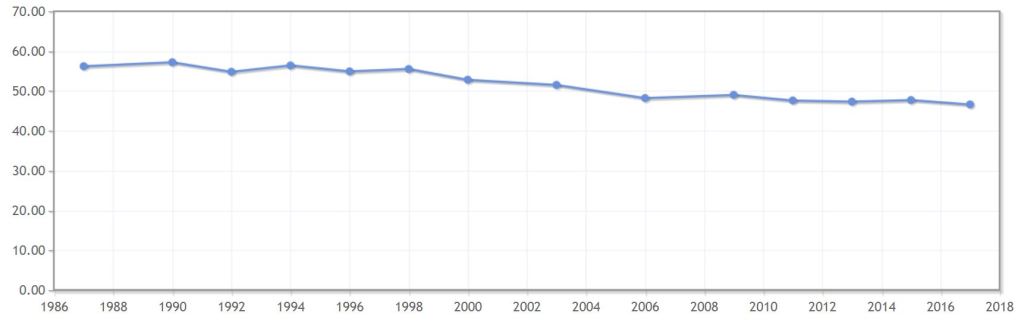
Economic stability can also be observed using the GINI coefficient. Chile has gone from 57.20 down to 46.60 in a matter of about 30 years. The GINI coefficient tells us the money distribution or economic inequality, with 100 having the highest inequality and 0 with the highest equality (Visit indexmundi.com/Chile!). With Chile’s decrease of more than 10 points, it shows that more than 10 percent of the money in the country has gone back to the people. This could be one explanation as to why the economy has been better now than it has been in the past because more money in the people’s hands means more money to spend in the economy. Chile’s GDP per capita PPP is expected to be $23400 by the end of this quarter, according to Trading Economics (Visit tradingeconomics.com/Chile!). Even though it is still less than half of what the USA’s GDP per capita PPP is, we can still see that the country is developing and surpassing many other countries economically.
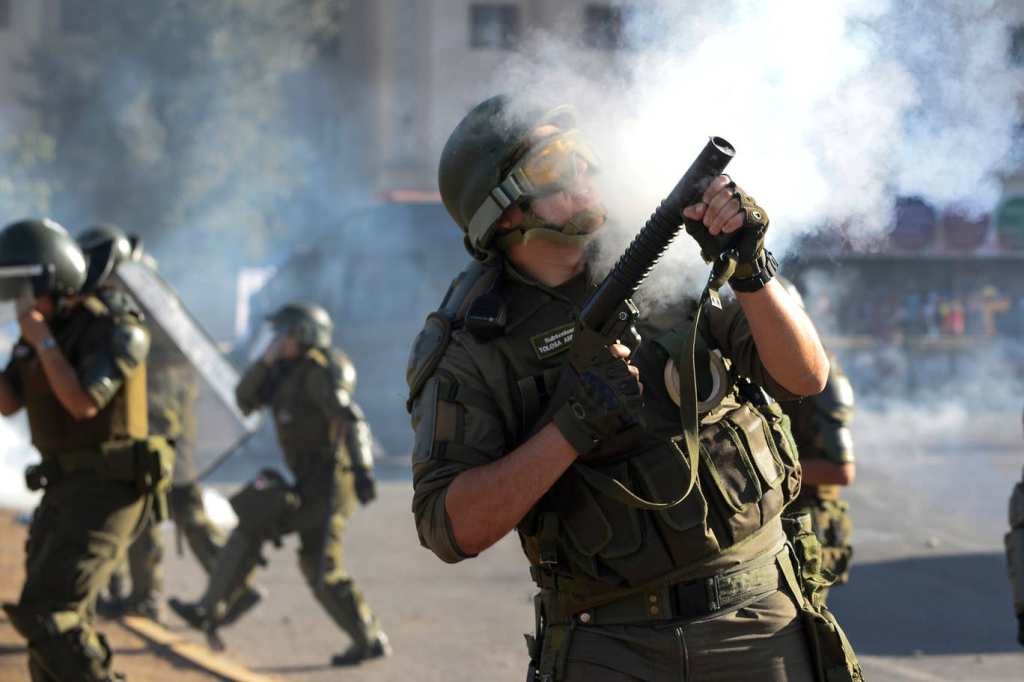
In recent news, Chile is still experiencing hardships from authorities resulting in protests gall throughout the country. The Independent, a UK media source, is still reporting a week later about the harsh riots and conditions of what is happening throughout Chile (Visit Independent.co.uk!). The source explains how Chile’s citizens are accusing their government officers and public authorities of abuse of power, with things like sexual harassing women and mistreating of detained or imprisoned people. Things like making women undress in front of men with authoritative power and not feeding people that have been arrested are just two examples of what some of the accusations have been. It’s a big deal for those who live there because usually when someone is breaking the law, you go to the authorities. However, when the problem is the problem itself, it can be had for reparations, and riots might be the only answer for justice.
 South America