POST #7
The biopolitical is a composite mixture of heterogeneous and sometimes conflicting, forces, discourses, institutions, laws, and practices that are embedded in and animated by material social relations. In the now extensive literature on biopolitics, our biopolitical era is characterized by the blending and mixing of what were previously thought of as separate realms: life is biologized, politics is biologized and biology is politicized, life and politics have been economized, and making life is intertwined with making death.
It is unmistakably apparent that viruses do not respect national borders. What deserves some attention is that the current global state of emergency, which is being largely administered by sovereign governments, has paradoxically unveiled the futility of the whole idea of sovereignty when it comes to exceptional circumstances. Discussions on this are not new, and there were plenty of voices in academia who, for decades, were skeptical about the ability of national governments to protect their citizens from terrorism, or properly take care of millions of refugees and internally displaced persons.
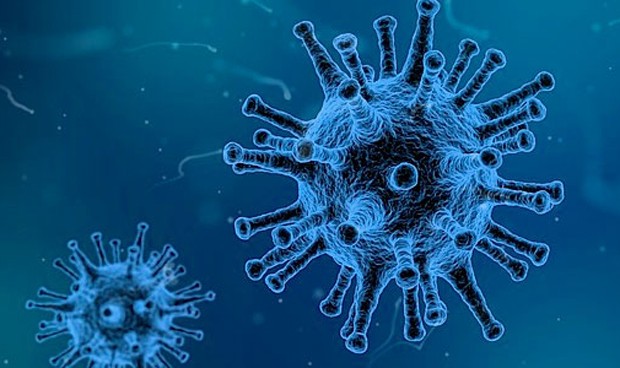
Nowadays, there’s an example of a virus reinforcing biopolicial strategies–COVID-19.The coronavirus pandemic seems to strongly confirm the growing tension between two types of global politics: territorial (geopolitics) and people-centric (biopolitics). The crisis has sharpened the deep conflict between traditional nation-state-based territoriality—with borders, checkpoints and other elements of security infrastructure—and the expanded space of the biopolitical agenda that is emerging beyond national jurisdictions.
The political instrumentalization of the crisis is inevitable, yet what makes more sense from an academic perspective is to remember that practices of biopolitical control and regulation have always been part of liberal society. In the meantime, it also makes sense to reactualize, from today’s perspective, what French political philosopher Michel Foucault dubbed “responsibilization”—the individual practices of ruling our bodies and managing our corporeal lives—something that is to remain a key element of a liberal polity.
Foucault’s notion of biopolitics, as he developed it in 1976,was not meant to show us just how evil this “modern” form of power is. Of course, it was not meant to praise it either. It seems to me that, in coining the notion of biopolitics, Foucault wants first and foremost to make us aware of the historical crossing of a threshold and more specifically of what he calls a society’s “seuil de modernité biologique” (“threshold of biological modernity”). Our society crossed such a threshold when the biological processes characterizing the life of human beings as a species became a crucial issue for political decision-making, a new “problem” to be addressed by governments—and this, not only in “exceptional” circumstances (such that of an epidemic), but in “normal” circumstances, as well.

We are no longer governed only, nor even primarily, as political subjects of law, but also as living beings who, collectively, form a global mass—a “population”—with a natality rate, a mortality rate, a morbidity rate, an average life expectancy, etc.
Instead of worrying about the increase of surveillance mechanisms and indiscriminate control under a new “state of exception,” I therefore tend to worry about the fact that we already are docile, obedient biopolitical subjects. Biopolitical power is not (only) exercised on our lives from the “outside,” as it were, but has been a part of what we are, of our historical form of subjectivity, for at least the past two centuries. This is why I doubt that any effective strategy of resistance to its most dangerous aspects should take the form of a global refusal.
Moreover, what I like about this pandemic is that the coronavirus puts us on a basis of equality, bringing us together in the need to make a common stand. with the emergence of biopolitics, racism becomes a way of fragmenting the biological continuum—we all are living beings with more or less the same biological needs—in order to create hierarchies between different human groups, and thus (radical) differences in the way in which the latter are exposed to the risk of death.
Biopolitics does not really consist in a clear-cut opposition of life and death, but is better understood as an effort to differentially organize the gray area between them. The current government of migration is an excellent example of this.
Indeed, as we are constantly, sometimes painfully reminded these days, biopolitics is also, and crucially, a matter of governing mobility—and immobility. Maybe this experience, which is new for most of us, will help us realize that the ordinary way in which “borders” are more or less porous for people of different colors, nationalities, and social extractions deserves to be considered as one of the main forms in which power is exercised in our contemporary world.
References:
http://www.ponarseurasia.org/article/biopolitics-crisis
https://www.researchgate.net/publication/332638649_Introduction_to_the_politics_of_life_A_biopolitical_mess
 South America