Blog # 4
What is the Best Course of Action for Combating Climate Change?
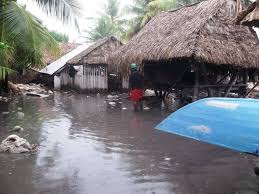
I think one of the biggest dilemmas we face is that while most people care for the environment, they do not know why they care or why they should feel responsible. For most of the world it is very easy to disassociate yourself from the effects of climate change when they are not immediately apparent. For many in the United States, global warming, rising sea levels and melting glaciers generally do not affect our day to day lives. However, we see a very significant impact on indigenous groups such as the Kiribati and Inuits. Kiribati is a small island in the South Pacific. Scientists say that in the next thirty to fifty years, islands like this one will be underwater due to rising sea levels due to climate change. Many islanders have already been forced to either build sea walls along the coast or move inland to combat rising sea levels. Unfortunately, while indigenous groups are being the hardest hit by the effects of climate change they lack the resources needed to counteracts it affects. One of the first and most important steps is to focus less about how climate change will affect humans in the future, but rather educate people on how climate change is impacting the world today. This might be through the struggles indigenous tribes face, animal species that have already gone extinct, etc. While it may be difficult for many to take responsibility, there are many important world figures that are making efforts to combat the progression of the effects of climate change. Recently, Amazon CEO Jeff Bezos donated ten billions dollars to fight climate change. Tesla CEO Elon Musk has made significant efforts to increase productions of solar panels to replace coal power plants.
The Amazon Conservation Team in Colombia
There are currently environmental protection groups in Colombia. One such group is the Amazon Conservation Team. The ACT notes that deforestation has taken an immense toll on Colombia, adversely affecting wildlife and causing fragmentation which results in loss of traditional food, medicinal plants and fisheries. The ACT works on land initiatives to protect for recognition, legal protection and sustainable management of areas of biological and cultural importance. ACT additionally focuses on improving the economic security of local and indigenous communities as well as their access to food, clean water, health and energy. ACT also assists with local community governance to help them voice their opinions and achieve their goals.
The Role of “Agency” in the Protection of Indigenous Lands
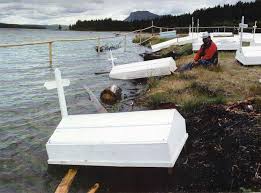
For many indigenous groups the land they live on is not just important because of the resources it provides, but also because it provides cultural value or “agency”. Larson in his presentation of Cheslatta people would argue that a place does have “agency” or a deeper spiritual connection to place beyond what resources it provides. For Cheslatta, this deeper spiritual connection developed from burial sites on the land. The ancestor of Cheslatta connected the people of the land. We saw that the rising tides created by warming global temperatures washed away many of their burial sites. In many ways this disrupted cultural ties to the land. Similarly, climate change has affected the “agency of the Inuit people located in the United States, Canada, Russia and Greenland. Much of their culture ties to the land the live on is rooted in hunting. Hunting practices are passed down from generation to generation. Global warming poses a significant threat to Inuit culture because melting ice has caused many animal species that were once hunted to go extinct. In the cases of both the Cheslatta and Inuit people we see that the effects of climate change create irreversible damages to spiritual connections to the land.
References
 South America