Post #3
While Colombian National Identity Remains Weak, it is Quickly Developing
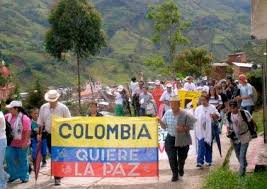
Colombia Struggles to Develop National Identity
According to the Encyclopedia Britannica, nationalism is an ideology based on the premise that the individual’s loyalty and devotion to the nation-state surpass other individual or group interests. We see that unlike many other South American countries, Colombia has a loose sense of nationalism. This is mainly due to weak legitimacy of the Colombian nation state, consequently preventing the creation of a hegemonic national identity. It is well known that Colombia is plagued by the infiltration of drug cartels, political corruption, and extreme income inequality. These issues make it very difficult to create a sense of national identity as opposed to many developed nations that do not have these problems.
Zakaria’s Fears of Nationalism
Zakaria fears the the rise of nationalism will create a divergence from western ideologies as developing nation become more economically established. For example, many developing nations rely of the United States’ economy to function. This can be seen in U.S. business using cheap labor in other countries. As these developing nations become more economically established they will rely less on U.S. businesses and consequently diverge from their roots of westernization. The divergence of western ideologies of developing nations is likely to lead to increasing political divisions between countries Most likely we will see this trend in Colombia. As Colombia becomes more economically established we will see an emphasis toward nationalism and consequently may lead to further political division in the region. Nationalism can also develop between particular groups within a nation. In the mid-1960, organizations within Colombia including government of Colombia, paramilitary groups, crime syndicates, and communist guerrillas fought to increase their influence in Colombian territory. This was known as the Colombian Conflict. While these groups all had different reasons for their actions, these groups developed from a growing sense of national identity.

Inequality of Colombia Stems from Political Corruption
Inequity is a very significant problem in Colombia. We see that much of the inequality that plagues the people of Colombia stems from political corruption in the form of kickbacks to political leaders. The leading story is that Colombia’s Avianca Airline is embroiled in a bribery scandal involving Airbus. According to the news source: “An executive of Colombia’s largest airliner Avianca sought at least $4 million in bribes to secure the purchase of 100 aircraft from Airbus, according to French authorities.” An agreement was entered into whereby Airbus is to pay a $3.9 billion fine to French, British and American authorities after admitting to bribery practices throughout the world between 2004 and 2016. Political corruption in the form of bribery is a large contributor to income inequality. The GINI coefficient is a measure of income or wealth distribution of a nations residency and is primarily used to measure income inequity. The World Bank estimates the GINI coefficient of Colombia to be 49.70 (where 0 represent perfect equality and 100 represent perfect inequality). A score of 49.70 indicates that Colombia suffers from income inequality to a significant degree.
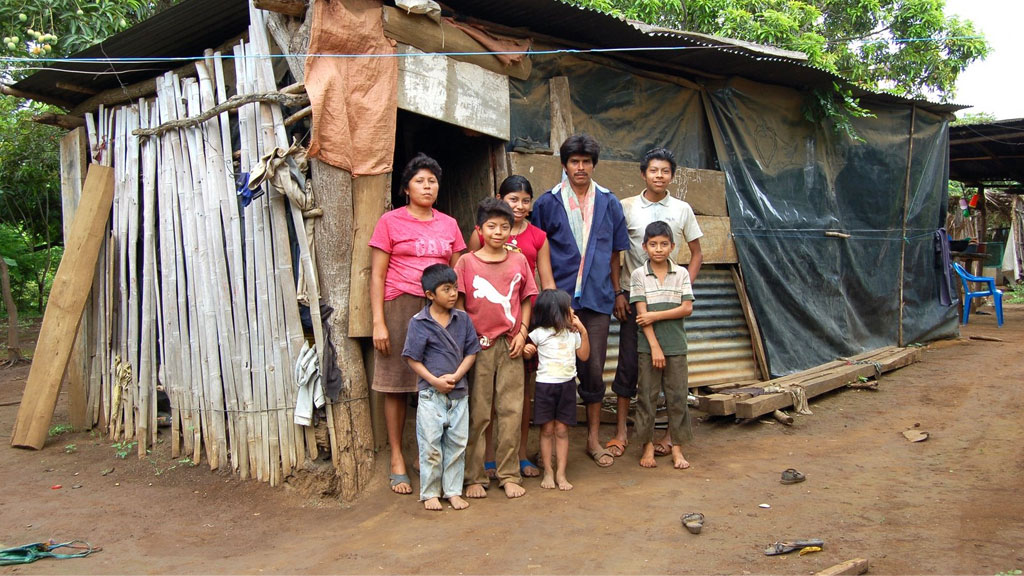
Native Populations Still Struggle to Adapt
One of the largest problems affecting indigenous populations in Colombia is the lack of recognition of their rights to be consulted. As a result, a very high percentage of them live in poverty. Tribes including the Chocó, Sucre, Boyacá, Nariño and Córdoba have poverty rates exceeding 50%. To help reduce rates of poverty among indigenous populations, between 1986 and 1990, politicians tried to rehabilitate marginalized zones to help integrate these groups with the rest of society. While efforts have been made to help Indigenous populations adapt to and function in society, there is still plenty of room for improvements. For example, indigenous political participation currently remains low due fragmentation between groups.
References:
Zakaria, The Cup Runneth Over pp.6-19,23-42
Steger, The Political Dimension of Globalization pp. 60-73
https://www.britannica.com/topic/nationalism
https://link.springer.com/chapter/10.1057/9780230601727_6
https://www.indexmundi.com/facts/colombia/indicator/SI.POV.GINI
https://www.cfr.org/backgrounder/colombias-civil-conflict
https://www.wsj.com/articles/avianca-opens-probe-following-airbus-bribery-settlement-11580841775
 South America