Post #1.

The country of Columbia has many issues of concern at this time according to Colombia Reports. The leading story is that Colombia’s Avianca Airline is embroiled in a bribery scandal involving Airbus. According to the news source: “An executive of Colombia’s largest airliner Avianca sought at least $4 million in bribes to secure the purchase of 100 aircraft from Airbus, according to French authorities.” An agreement was entered into whereby Airbus is to pay a $3.9 billion fine to French, British and American authorities after admitting to bribery practices throughout the world between 2004 and 2016.
In other news, Colombia has illegal armed groups who recruit minors in a “widespread and systematic” practice. Guerilla groups like the ELN, dissident FARC (a former rebel group that demobilized and disarmed in 2017), and the EPL, and the paramilitary group AGC continue to recruit children as did FARC until its demobilization. Pacific port cities are targeted because of strategic importance in the drug trade, assassinations or sexual exploitation. Children are recruited “with the promise of better living conditions and access to financial resources.”
The drug trade has turned southern Colombia into a war zone, where such region has now had its 13th assassination. Assassins are even terrorizing the population and security forces are absent. The drug trade in this region was formerly controlled by FARC. Homicides in Colombia went up 3% in 2019 according to the country’s medical examiner’s office, which contradicts claims by the government that homicides dropped. According to the medical examiner’s office homicides went from 11297 in 2018 to 11630 last year. The number of homicides has increased as security forces failed to assume control over abandoned guerilla territory, which caused a power vacuum.
Former FARC guerillas and their families abandoned a FARC reintegration site in northern Columbia on Thursday, claiming they feared for their lives. They alleged that there was an extermination plan in action. Less than 50 stayed behind. This decision was made after Cesar Dario Herrera became the 12th assassinated resident of the reintegration site in three years. The FARC members claim that the deal for peace was “half-failed,” with 185 of the approximately 13,000 members who demobilized and disarmed having been assassinated since putting down their weapons. Additionally, hundreds of community leaders and human rights defenders have been assassinated.
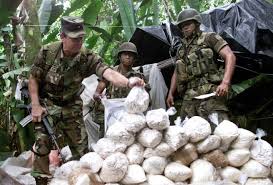
Colombia’s President Ivan Duque on Thursday rejected the offer of Nicolas Maduro, the Venezuelan leader, to reestablish consular relations between the two countries. The dispute arose when Duque facilitated an attempt by opposition leader Juan Guaido to force American aid trucks across the border as part of an opposition effort to oust Maduro. Evidence later confirmed the claims of locals that drug trafficking group “Los Rastrojos” and Duque’s presidential guards helped Guaido into Colombia. Maduro now plans to use a captured former politician from Duque’s government to discredit Duque and his political allies.
Colombian news is also reporting that a disease has killed 10 children in West Colombia indigenous communities. Regional authorities have sent physicians and bacteriologists to the Baudo river in the Choco province to confirm suspicions that contaminated water is killing the children. At least 180 other children have fallen ill because of the illness in the river communities with approximately 1,500 inhabitants. Communities along the river have no access to drinking water, and often suffer food shortages and have no access to healthcare, which is complicating the determination of what is causing the recent spike in child deaths. Water consumption is one of the major risk factors, as well as food management and the handling of waste, according to the Choco heath secretary. The dumping of mercury used in illegal mining and waste products that come from cocaine production aggravate the heath situation, especially among children. Guerilla and paramilitary activity in the province complicate efforts to combat chronic state abandonment and provide basic public services to isolated communities like those living along the Baudo river.
When we look at the fragile state index, Colombia is ranked as the sixty fist most fragile state. Colombia is considered by the fragile state index as an “Elevated Warning”, which indicates that they are moderately fragile. As of recently we find significant economic inequality in Colombia. For example, as mentioned earlier, airliners are receiving huge kickbacks while much the country does not have access to clean drinking water. The presence of drug cartels also contributes to wealth gaps among the population. The drug cartels in Colombia are infamous from bribing politicians and killing rival politicians. As a result, politicians have motives to satisfy high ranking drug cartel members as opposed to making decision to help the people. Tony Judt discusses how inequality is very closely related pathological social problems. These problems include infant mortality, life expectancy, criminality, obesity, and drug use. We see much of these affects on Colombia today as a result of social inequality. For example, criminality and drug use in Colombia are at an all-time high. Not only does social inequality create these issues in Colombia, but it also exacerbates these issues even further, creating a never ending cycle.
References:
 South America